Hospitality marketplace
A curated stays marketplace for a remote valley in Kashmir. The goal was that it should not feel like a generic booking site. It should feel like a careful local travel advisor: inspiring enough to browse, practical enough to remove doubt, and structured enough to turn visitors into bookings or planning enquiries.
Three apps, one backend
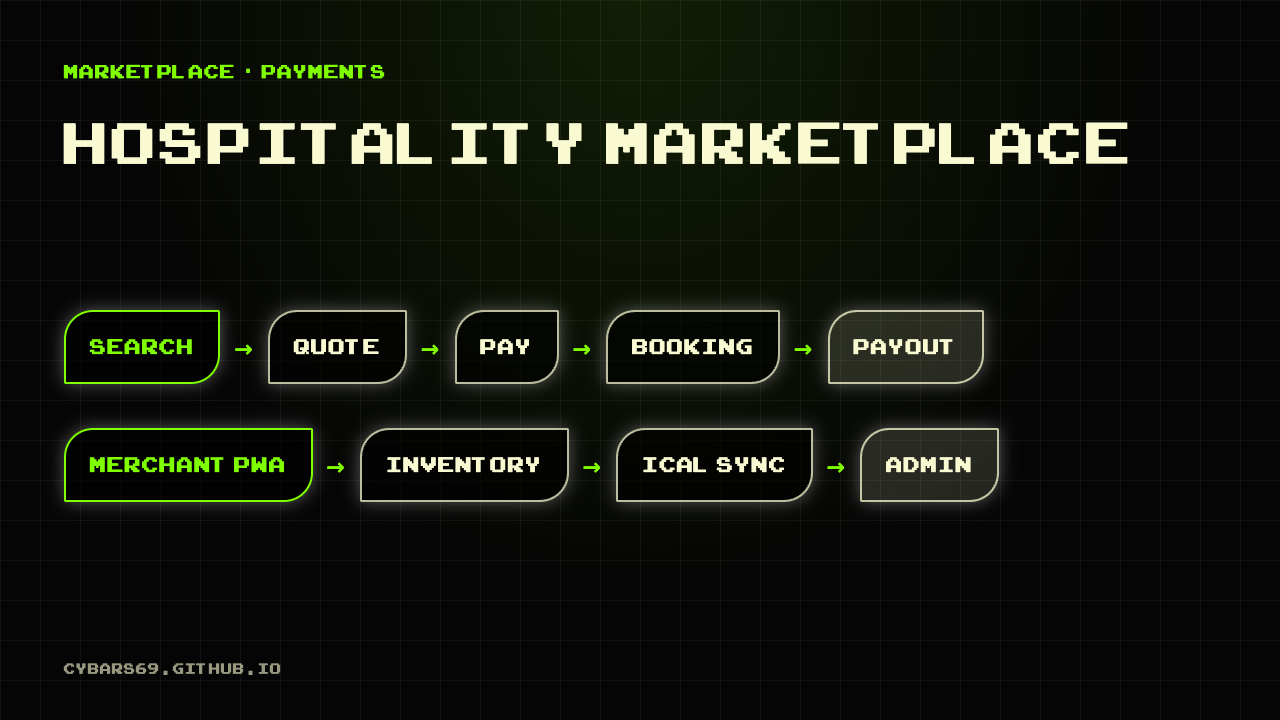
- A customer marketplace in Next.js: search by village, dates and guests, property detail, checkout.
- A merchant PWA for hosts: inventory, rates, availability, cancellation rules, payouts.
- An admin system for approvals, refunds, disputes and audit logs.
All three sit on one FastAPI and PostgreSQL backend with around 150 endpoints across six domains.
The interesting parts
- Booking state transitions. A booking moves through explicit states, and payments are confirmed by webhook rather than trusted from the browser.
- Inventory sync. iCal feeds keep availability consistent with the channels hosts already use.
- Configurable cancellation and refund rules, so a host’s policy is data rather than code.
- Provider abstractions. Payments, payouts, SMS and search sit behind interfaces, so a provider can change without rewriting business logic.
Auditing it like a real OTA
Before launch I audited the platform against what an online travel agency needs. It was strong on supply, demand and operations, and weak on distribution: no channel manager mapping, incomplete restriction modelling (closed-to-arrival, min and max stay, stop-sell), no booking amendment flow. Writing that gap list down made the launch plan honest.
It launched in 2026 and receives live traffic.
Stack
Next.js, React, FastAPI, PostgreSQL, iCal, webhooks, PWA.